How to Buy Funeral Flowers
Buying funeral flowers can feel overwhelming—especially when you’re grieving or trying to support someone you care about. Many people worry about choosing the “right” arrangement, spending the right amount, or accidentally doing something inappropriate. It is more challenging because there are few hard rules when it comes to funeral flowers (often called "sympathy flowers"). The most important thing is the intention behind the gesture—expressing sympathy, respect, and care.
This guide explains the most common types of funeral flowers, who typically sends them, and how to make a thoughtful choice with confidence.
Why People Send Funeral Flowers
Flowers have been used to honor the deceased for centuries. Across cultures and religions, they serve as a visible expression of remembrance, comfort, and respect.
Today, funeral flowers are often sent to:
Honor the life of someone who has passed
Offer comfort to grieving family members
Show support when words feel insufficient
Acknowledge a loss when you cannot attend in person
Funeral flowers are not about perfection—they are about presence.
Types of Funeral Flowers
Understanding the most common categories can make the buying process much easier.
Casket Flowers
Casket flowers are arrangements designed to be placed on or near the casket during a service. These are most often chosen by immediate family members.
Common forms include:
Casket blankets – low arrangements that rest on the closed portion of a casket
Full casket sprays – larger designs that cover the entire casket
Standing Sprays
Standing sprays are large arrangements displayed on easels near the casket or altar. They are often sent by extended family, close friends or co-workers and organizations. It is traditional to attach a ribbon stating the giver's relationship to the deceased (for example, brother)
Set Pieces
Set pieces are floral designs created in specific shapes, such as hearts, crosses, or wreaths. These are typically chosen by family members or close friends and may reflect religious or symbolic meaning.
Sympathy Arrangements
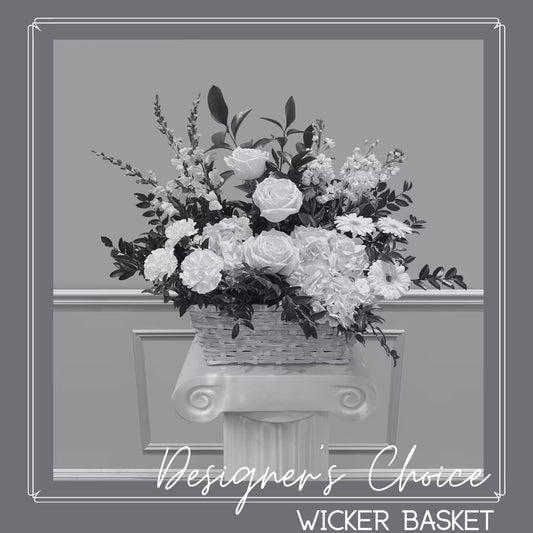
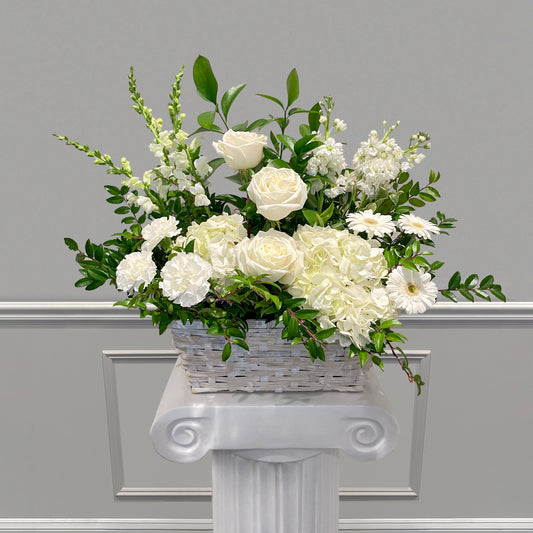
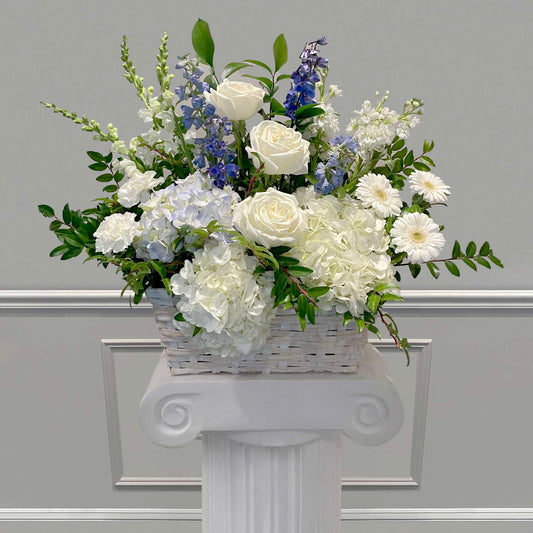
Sympathy arrangements are sent to the family’s home or to the funeral service. These include: Vase arrangements, basket arrangements and garden-style designs. It is always appropriate to send vase arrangements, and they are popular items because families are able to take them home after the service.
Where Should Funeral Flowers Be Sent?
Funeral flowers may be sent to:
The funeral home
A church or place of worship
The family’s home
The team at Evans works closely with the funeral home and churches to make sure the flowers are delivered at the right place and the right time.
How Much Should You Spend on Funeral Flowers?
There is no required amount. Spending is typically based on your relationship and budget. As a general rule, a sincere gesture is always more meaningful than the size of the arrangement and vase arrangements are always well received.
Choosing the Right Flowers
Color, style, and flower type all play a role—but none are mandatory.
Many people choose:
Soft, neutral colors for traditional services
Brighter colors to celebrate a joyful or expressive life
Seasonal flowers that feel natural and comforting
If you have any questions, one of our staff members can help you find the right balance of flowers, color and tone.
Frequently Asked Questions
Do I have to send funeral flowers?
No. Flowers are a kind gesture, not a requirement. Many people choose to send cards, donations, or personal messages instead.
What if I can’t attend the funeral?
Sending flowers is a thoughtful way to express sympathy when you cannot attend in person.
Are funeral flowers religious?
Not necessarily. While some arrangements include religious symbolism, many are entirely secular.
Can I send flowers after the service?
Yes. Sympathy flowers sent to the family’s home after the service are very common and appreciated.
What should I write on the card?
A simple message is enough. Examples include:
“With deepest sympathy”
“Thinking of you during this difficult time”
“In loving memory”